Fall 2027 · Fully funded PhD
AI, Organic Geochemistry, and the Molecular Record of Earth History
We are seeking a PhD student to join the group at Washington University in St. Louis in Fall 2027. The project combines organic geochemistry, petroleum geoscience, and artificial intelligence.
- Application deadline
- December 1, 2026
- Start
- Fall 2027
- Funding
- Fully funded
- Degree
- PhD in Earth, Environmental, and Planetary Sciences
- Advisor
- Alexander S. Bradley
The project
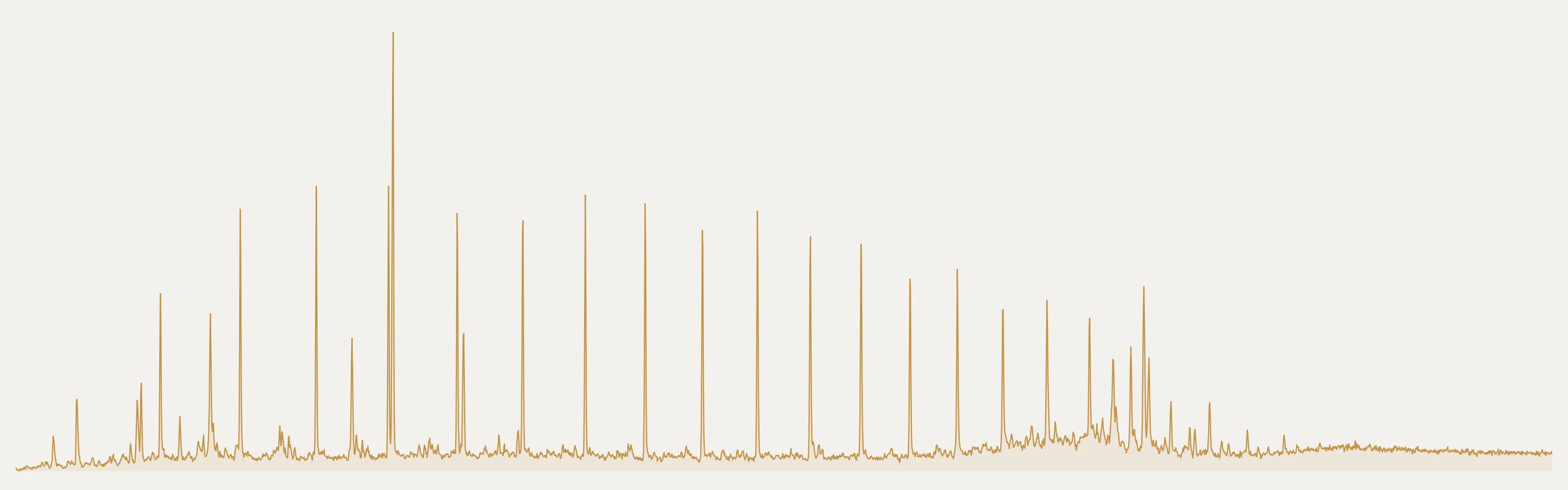
Crude oil contains molecular fossils: organic compounds made by organisms that lived in the past. Geochemists use these molecules to reconstruct ancient environments, understand the history of life, and determine where oils came from and what happened to them after burial.
Traditionally, this work has been done by examining a few molecular measurements at a time. We want to find out what we can learn by simultaneously looking at thousands of samples and many kinds of measurements.
Through an industry research collaboration, we have access to a large petroleum geochemistry dataset: thousands of extensively characterized samples and hundreds of thousands of additional samples with partial analyses. Data include molecular biomarkers, chromatograms, stable isotopes, geological information, and expert interpretations.
We will use machine learning to find structure in these data. Can we identify oils that share a source or geological history? Can we recognize unusual samples? Can we make useful comparisons when only part of a sample has been analyzed? Can the molecular record tell us something new about changes in life and environments through Earth history?
Those are research questions, not assumptions about what the models will find.
What would you work on?
The student will lead the geoscience side of the project: developing questions, interpreting the geochemistry, testing whether model results make geological sense, and ensuring that AI representations encode geological knowledge.
You will also work closely with computer scientists who specialize in representation learning. We expect to explore approaches for finding similarities among samples, combining different kinds of scientific measurements, working with incomplete data, and estimating uncertainty. We will compare these methods with simpler statistical approaches rather than assuming that a more complicated AI model is necessarily better.
Some possible dissertation questions include:
- Can we recognize oils derived from similar source rocks or environments?
- What molecular patterns distinguish petroleum systems?
- What can we infer from samples that have only been partly analyzed?
- Can we find meaningful geochemical patterns that conventional approaches have missed?
- Does petroleum preserve molecular evidence of events such as mass extinctions or the rise of flowering plants?
- How have molecular signatures changed across geological time and geography?
The exact dissertation will develop as the project progresses.
Who should apply?
You do not need to be an expert in both geochemistry and machine learning.
We would particularly like to hear from geoscience students who enjoy quantitative work and want to learn modern AI methods. Students coming from petroleum geology or petroleum engineering are also welcome. A student with a stronger computational background could be a good fit if they are genuinely interested in learning the Earth science.
Possible backgrounds include geology, geochemistry, petroleum geology, petroleum engineering, geophysics, chemistry, data science, and computer science.
Experience with Python, statistics, machine learning, chromatography, petroleum systems, or organic geochemistry is useful but not required. More important is an interest in scientific problems, comfort with quantitative reasoning, and a willingness to learn things outside your current field.
Research environment
The student will be based in Earth, Environmental, and Planetary Sciences at Washington University in St. Louis.
Interested?
The position is fully funded and begins in Fall 2027.
If this sounds like a project you might want to work on, email us at abradley@wustl.edu. Tell us a little about your background and what interests you about the project, and attach a CV or résumé. You do not need to send a research proposal.
Formal applications are submitted through the EEPS graduate program.