Investigating Metabolic Heterogeneity
Genetically identical bacteria don't all do the same thing. We use SIMS to measure metabolism one cell at a time and find out why.
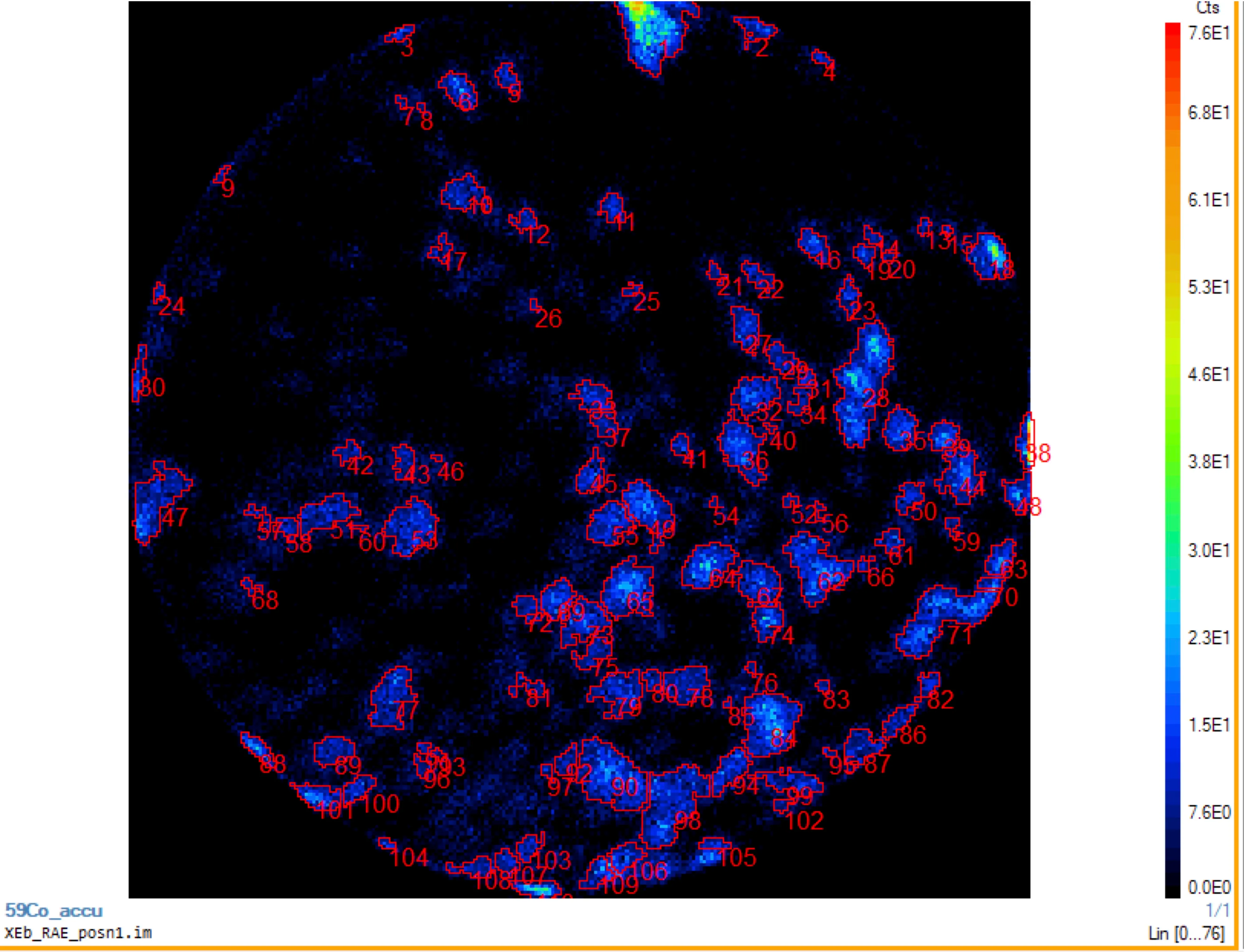
If you take a clonal bacterial population and feed it a labeled substrate, most cells do what you’d predict. But some fraction does something different: different uptake rates, different metabolic strategies, sometimes completely different phenotypes. This isn’t genetic variation. It’s cells with the same genome making different choices.
One explanation is bet-hedging. If the environment fluctuates, a population that maintains a few metabolically “weird” cells is better positioned to survive a sudden change. We want to know when that’s actually what’s going on versus other explanations.
SIMS
We measure this cell by cell using secondary ion mass spectrometry (SIMS). SIMS lets us image isotope ratios at sub-micron resolution, so we can see exactly which cells in a population took up a labeled substrate and which didn’t, and lets us measure things like metal concentrations or even a labeled nucleotide tag.
How it works
We grow cultures, feed them stable isotope tracers, and then analyze hundreds of individual cells by SIMS. This gives us distributions of metabolic activity across a population rather than just a bulk average. From there, we can ask mechanistic questions: what controls the fraction of cells that behave differently, and under what conditions does that variation actually help the population? Do these cells express genes differently? Do they have other differences in their phenotypes?
Why it matters for the rock record
The molecular and isotopic signatures we find in ancient sediments were made by microbial populations, and those populations were heterogeneous. A bulk geochemical measurement from a rock is a weighted average across all the cells that contributed to it. If a metabolic minority was doing something different from the majority, the bulk signal doesn’t represent what any individual cell was actually doing. Knowing what metabolic variation looks like in living populations tells us how to read those averages more carefully.